Foil, Plastic or Metal: Which Dryer Duct Is Best?
The duct behind your dryer may look like a minor detail, but its material affects how much lint it traps and how easily it gets crushed.
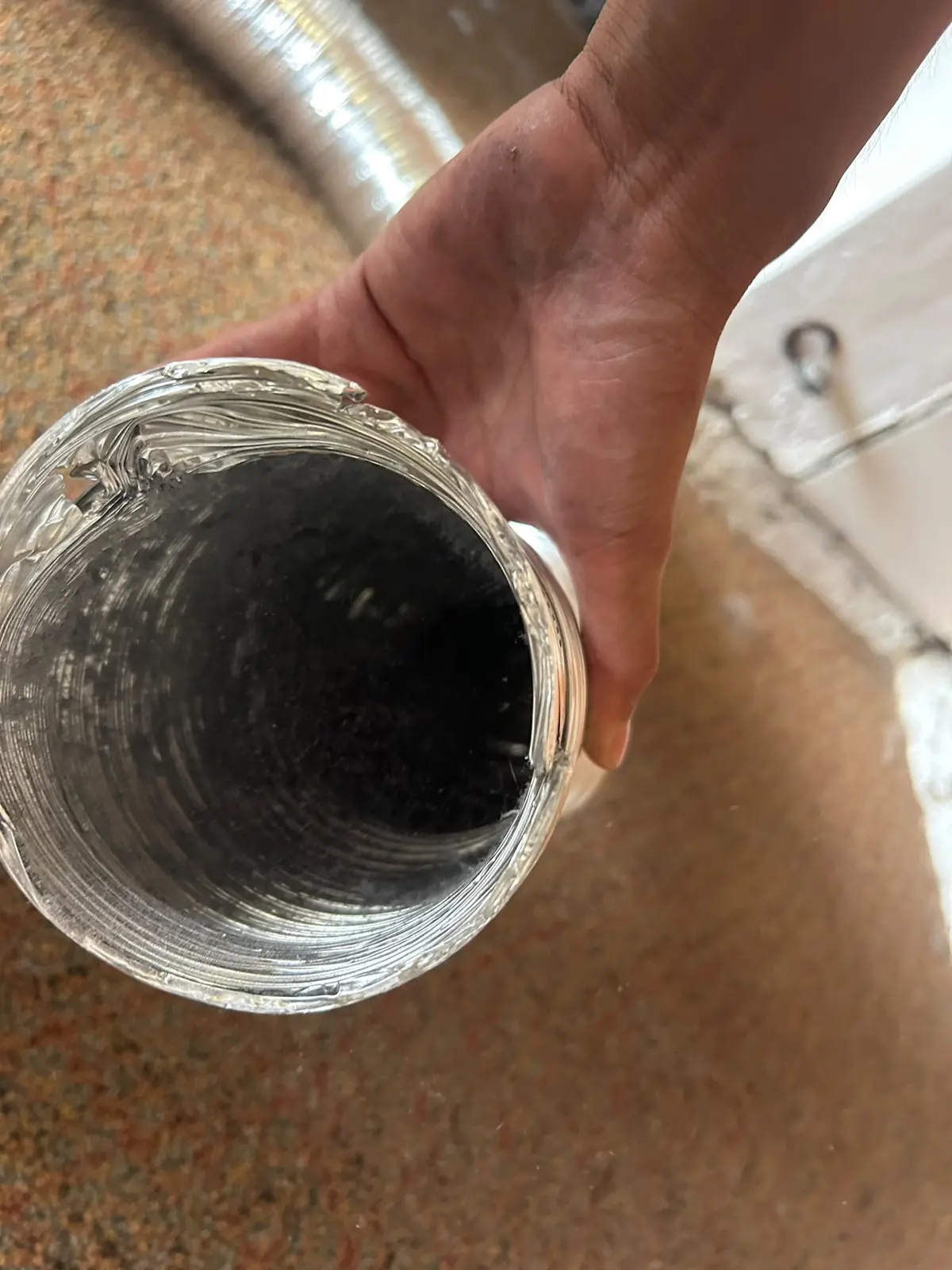
The options
| Type | Good for | Watch for |
|---|---|---|
| Rigid metal | Smooth interior for main vent runs | Needs careful fitting around bends |
| Semi-rigid metal | Short connections behind the dryer | Ridges can catch some lint |
| Flexible foil | Tight spaces if your dryer maker allows it | Crushes and sags easily, and ridges catch lint |
| Plastic or vinyl | Not recommended | Check your manual. Replace it if you find it. |
What to follow
Your dryer manual is the first place to look, because it gives the approved materials and maximum vent length for that model. Local code may apply too. If the duct goes inside a wall, it needs to meet those rules, so a flexible connector shouldn't just be pushed through.
Quick check
Pull the dryer forward and look at the connector. If it's crushed, torn or plastic, or if it's holding visible lint, it's time to act. We can replace it and clean the rest of the vent on the same visit.